During peak swarming season, inspect your colony every 7 days to watch for queen cells and signs that it may swarm. Outside that period, the answer to how often you should inspect a beehive depends on the colony’s needs, your reason for opening it and the weather. A routine summer check for a new beekeeper is often about every two weeks.
It’s natural to want to look in regularly, especially when you’re learning to read the frames. But opening a hive too often, or in unsuitable conditions, can disturb the colony without answering a useful question. How often should you inspect a beehive? The answer depends on the season, the purpose of the inspection, the weather and your experience. A focused schedule helps make each visit timely and useful.
Key Takeaways
- During peak swarming season, check colonies every 7 days for queen cells and signs of swarm preparation.
- Set a clear purpose before opening a hive, such as checking brood, stores, space or signs of pests and disease.
- Choose a warm, dry, calm day; around 15°C or above is a useful guide for a full inspection.
- Adjust your routine to the season and colony: winter usually calls for external checks, while active colonies may need closer attention.
- If you’re new to beekeeping, use a regular schedule as a starting point, then let the bees’ condition and the weather guide your next check.
1. How frequently to inspect during swarming season
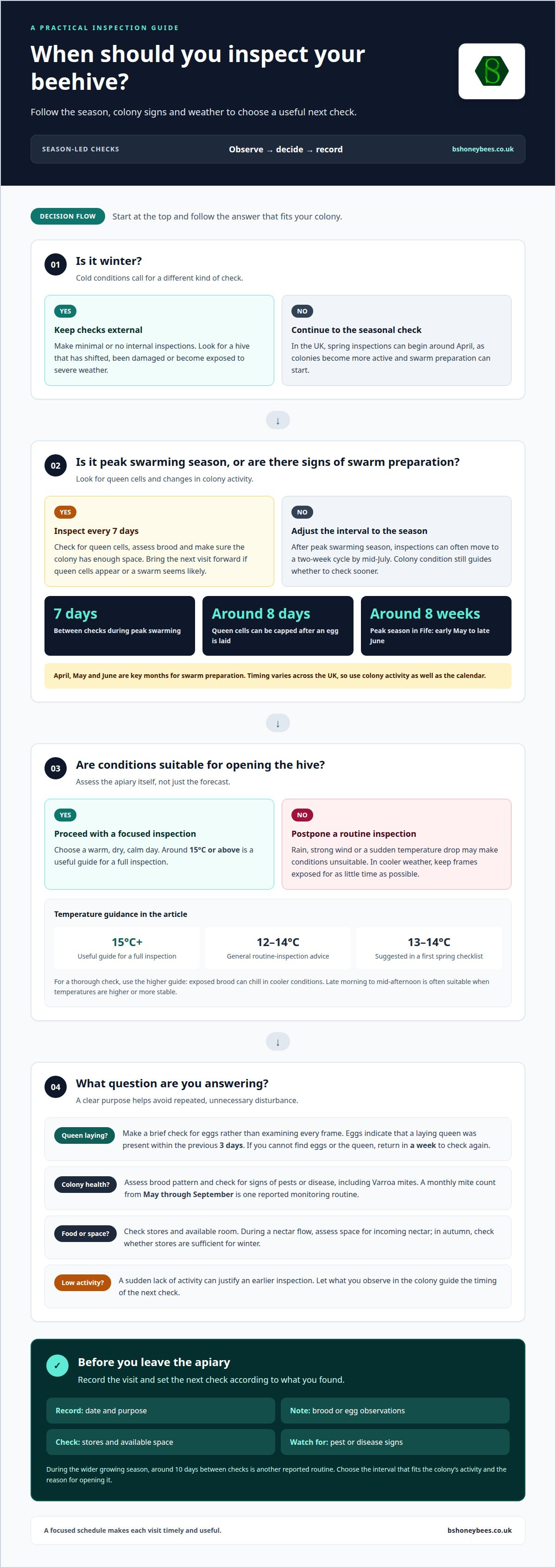
In the United Kingdom, begin spring inspections around April, when colonies become more active and swarm preparations can start. During peak swarming season, inspect every 7 days. This interval helps you spot queen cells before the colony is too far along in its preparations. Queen cells can be capped from around 8 days after an egg is laid, so longer gaps can leave little time to respond.
Make each spring visit purposeful. Look for queen cells, assess brood and check whether the colony has enough space. From April onwards, a weekly inspection is a practical rhythm for active swarm management, weather permitting. April, May and June are key months because colonies can prepare to swarm quickly. A quiet inspection does not mean the risk has passed, so repeat the check on schedule.
Keep the interval short during peak activity, then adjust as the season changes. In Fife, peak swarming season is described as roughly 8 weeks, from early May to late June. Timing varies across the UK, so use colony activity rather than a fixed calendar date alone. If you find queen cells or suspect a colony is preparing to swarm, give it closer attention instead of waiting for a routine visit.
After peak swarming season, inspections can often move to a two-week cycle by mid-July. Continue checking brood, stores and available space, but let the colony’s condition guide whether another visit is needed sooner. During the wider growing season, around 10 days between checks is another reported routine. Choose the interval that fits the colony’s activity and the reason for opening it, rather than inspecting simply from habit.
Swarm prevention also depends on what you do during each inspection. Find and assess queen cells, then consider whether the colony has enough room and whether its strength is increasing. A hive with expanding brood and busy foraging may need a different response from one showing little activity. Record what you see and set the next inspection date before leaving the apiary.
Use a simple seasonal plan: start checking in April, inspect every 7 days during peak swarming, then consider extending to around two weeks after mid-July. Bring the next visit forward if swarm signs appear. This approach keeps inspections frequent enough to monitor change without opening the hive more often than the season and colony require.
2. Why conduct inspections?
Queen cells, signs of disease or pests, and a sudden lack of activity can all call for an earlier inspection. If you can’t find eggs or the queen, return in a week to check again. A focused visit can establish whether the colony needs attention without opening the hive repeatedly or without a clear purpose.
Use each thorough inspection to assess the colony’s health and resources. Check the brood for a consistent pattern, look for signs of Varroa mites and note whether the bees have enough stores. During a nectar flow, assess whether they have room for incoming nectar. If foraging is poor and stores are low, consider whether feeding is needed. A change in any of these signs can justify bringing the next check forward.
Some checks can be brief. If your immediate question is whether the queen is laying, look for eggs rather than examining every frame in detail. Seeing eggs indicates that a laying queen was present within the previous three days. Record the result and return to a thorough inspection when you need to assess brood, stores, pests or space. A monthly mite count from May through September is one reported monitoring routine.
Autumn inspections help you assess whether the colony has enough stores for winter and whether any concerns need attention before colder conditions arrive. Check the colony’s overall condition and note its remaining food. If stores appear low, address that need rather than relying on a routine calendar date. The aim is preparation, not repeated disturbance.
Winter calls for minimal or no internal inspections, so make external checks instead. Look for signs that the hive has shifted, been damaged or become exposed to severe weather. Avoid opening it simply out of curiosity, as disturbing the cluster can be counterproductive in cold conditions. If feeding is needed, base the decision on the colony’s condition and available stores.
Keep a short record after each visit: date, purpose, brood or egg observations, stores, and any pest or disease signs. That makes changes between checks easier to spot and helps you choose a useful next step. Keep those notes alongside your wider colony management plans, so each inspection has a clear purpose.
3. How weather and temperature affect inspections
Choose a warm, dry, calm day for opening a hive. In the UK, around 15°C or above is a useful guide for a full inspection, provided conditions are suitable. General advice places routine inspections at daytime temperatures of at least 12 to 14°C, whilst a first spring inspection checklist suggests 13 to 14°C. For a thorough check, use the higher guide: exposed brood can chill if left uncovered in cooler conditions.
March and early April can still bring temperatures that are too low for a full spring inspection. If frames need examining, work methodically and keep them exposed for as little time as possible. Prepare the smoker, hive tool and record-keeping materials before opening the hive. This gives the inspection a clear purpose and avoids leaving the colony open longer than necessary.
Timing during the day matters too. Late morning to mid-afternoon is often suitable because temperatures are usually higher or more stable, and flying bees are out foraging. Before lifting frames, assess conditions at the apiary, not just the forecast. A bright but chilly morning may still be too cold for a thorough inspection. Wait for warmer conditions if the colony’s needs allow.
Weather can also affect whether to proceed with a planned check. If rain, strong wind or a sudden temperature drop makes conditions unsuitable, postpone a routine inspection and choose a calmer, warmer window. This matters especially when opening several frames or checking brood. A quick external observation can help you decide whether the hive needs attention without exposing the colony unnecessarily.
After severe weather, an inspection may be needed, but don’t open the hive immediately. Allow conditions to settle, then check for visible damage or disturbance before deciding whether an internal inspection is necessary. If the purpose is urgent, such as assessing suspected feeding needs or checking a Varroa treatment, keep the visit focused and limit how long frames remain exposed.
Let the inspection’s purpose guide your decision about the weather. A brief check for a visible issue needs less time than examining brood, stores and the colony’s condition across several frames. Match the depth of the inspection to the temperature and conditions. If you cannot carry out a full inspection without risking the brood, note what you can observe externally and plan the internal check for a suitable day.
Record the temperature, weather and findings at each visit. Comparing notes helps explain why an inspection was postponed and whether conditions affected the colony’s activity. A consistent approach helps protect brood from chilling while ensuring that poor weather does not become a reason to overlook a developing concern.
4. How often should I inspect my beehives?
Use each visit to answer a specific question, then stop once you have the answer. In the UK, inspection frequency depends on the colony’s condition, the season and the purpose of the visit, rather than one interval that suits every hive. One routine is a quick egg check on the first day of each month, followed by a more thorough inspection about two weeks later.
Before opening a hive, decide what you need to assess: eggs, brood, stores, space or a particular concern. During a nectar flow, for example, check whether the colony has room for incoming nectar and whether supers are needed. If you’re checking brood, focus on the brood box and return frames promptly. A clear purpose keeps the inspection focused and limits unnecessary disturbance.
Some hives have a window that lets you observe activity without removing the roof or lifting frames. Use it to note whether bees are moving across the visible comb, but treat this as a limited view, not a substitute for checking brood or stores when those questions matter. A window can help you decide whether a full inspection is timely, but it cannot show every part of the colony.
The entrance offers another useful observation point. Watch for bees bringing in pollen, steady flight or a change in activity since your previous visit. During a nectar flow, returning foragers can indicate resource gathering, while reduced movement may prompt you to consider the weather and the colony’s condition. Entrance activity can offer a useful indication of colony activity, but it cannot answer every question about the colony.
Write a short record after each visit: the date, purpose, eggs or brood seen, stores, available space and any action taken. Compare it with the previous inspection. If you find neither eggs nor the queen, return in a week. If the inspection doesn’t answer your question, plan another visit in ten days rather than repeatedly opening the hive without a clear reason.
Avoid opening the hive when cold or unsettled weather could chill exposed brood, or when no internal check is needed. In winter, keep inspections minimal and rely on external observations; open the hive only for a specific concern that warrants it. Between full inspections, entrance activity or a window may help you monitor changes without disturbing the colony.
5. How often new beekeepers should inspect hives
For a new beekeeper, a useful starting point is one inspection each week during the active season, weather permitting. In spring, aim for checks every 7-10 days, particularly as colony activity increases. That routine gives you regular opportunities to learn what normal brood and stores look like, while keeping visits purposeful rather than opening the hive whenever curiosity strikes.
After the spring build-up, a summer interval of about two weeks can suit a beginner’s routine. In autumn, inspections can move to every 2-3 weeks as activity changes and winter preparation takes priority. These are starting points, not automatic calendar rules: bring the next inspection forward if you see a clear concern, such as signs of swarming or a shortage of stores.
Give a newly installed honeybee colony about a week before opening the hive. Use that first visit to look for signs of laying and check the colony’s progress without rushing through every frame. Eggs indicate that a laying queen was present within the previous three days. If you don’t see eggs or find the queen, return in a week rather than repeatedly opening the hive to search.
Take your time, but work carefully. A beginner may need more than 15 minutes to inspect a colony, especially whilst learning to lift frames steadily and recognise brood stages. Prepare your equipment beforehand, inspect one frame at a time, and keep brood exposed only as long as needed. If an inspection doesn’t reveal what you need to see, schedule another check in ten days.
Keep a simple record after every visit: the date, what you wanted to learn, what you observed and what needs attention next. For example, note whether eggs were present, how the brood looked and whether stores seemed adequate. Comparing entries makes changes easier to spot and helps you choose a sensible interval for the next inspection. Follow the seasonal routine, then adjust it to the colony’s activity and the weather.
Regular practice builds inspection skills, but opening a hive without a reason can disturb the colony. Use external observations between planned visits, and reserve a full inspection for a question that requires checking frames. To prepare your routine and equipment for those first checks, plan your first hive inspections.
BS Honey Bees Ltd
BS Honey Bees Ltd is a useful next step when your inspection routine points to a practical need, such as establishing a colony or expanding your apiary. Its range includes F1 Buckfast and Carniolan Queens, 5 / 6 Frame Nucs, and 2 in 1 Poly Nucs. These offerings are relevant when you’re planning a new colony or choosing equipment to support your beekeeping setup.
Use these inspection principles to understand what your apiary needs before deciding on your next step. If you’re considering a queen, nuc or poly nuc, explore BS Honey Bees Ltd’s available options and contact the team for help choosing what suits your apiary.
Build a routine that grows with your experience
Your inspection routine should develop alongside your ability to read the colony. Choose a clear reason for each visit, then use what you observe to decide whether the next check should stay on schedule or happen sooner. Over time, familiar signs become easier to recognise, helping you make more deliberate decisions.
If you’re still weighing how often you should inspect a beehive, focus on making each visit purposeful rather than following a calendar without question. A steady approach helps you notice meaningful changes and avoid opening the hive without a clear need. Keep adapting your routine to the bees, the season and the conditions on the day.
When your beekeeping plans involve adding a colony or choosing suitable stock, BS Honey Bees Ltd can help you consider the available options. Contact BS Honey Bees for help as you plan your next step, and keep building your confidence one considered inspection at a time.
Frequently Asked Questions
How often should I inspect my beehives?
Set the interval according to season, colony activity and what you need to check. During peak swarming, a 7-day cycle helps you monitor queen cells; after peak activity, around two weeks may suit routine checks. For example, bring the next visit forward if you notice a sudden change in entrance activity or suspect the colony is short of stores. Keep a record so each decision reflects the hive’s condition.
At what point is an inspection too long?
During peak swarming, leaving more than 7 days between inspections risks missing queen-cell development. Queen cells can be capped from around 8 days after an egg is laid, so a weekly check gives you a timely opportunity to assess progress. Outside that period, judge the gap by the reason for inspection. If a specific concern develops, such as suspected queenlessness, don’t wait for the usual routine visit.
Quick answer: When should you inspect bees?
Inspect during a warm, dry, calm part of the day, and choose a visit interval that matches the season. Late morning to mid-afternoon often provides more suitable temperatures, with flying bees out foraging. For a full inspection, around 15°C or above is a useful guide when conditions are also dry and calm. If you only need to observe entrance activity, watch before deciding whether opening the hive is necessary.
When is it safe to start inspecting?
Begin a full inspection when daytime temperatures are around 15°C or above and conditions are dry and calm. General inspection guidance gives 12 to 14°C as a lower temperature range, but exposed brood can chill during a prolonged check. In March or early April, wait for a suitable spell if the colony’s condition allows. Prepare tools first, then keep frames covered or return them promptly.
Why conduct inspections?
Inspect to answer practical questions about the colony, not simply to look inside. A thorough visit can help you assess brood, stores, available space, pests and signs of disease. During a nectar flow, for instance, you may need to judge whether the colony has room for incoming nectar. A targeted check can also help investigate suspected queenlessness. Record the reason for the visit and what you find to make the next inspection more useful.
How often should a beginner inspect a beehive in the UK during spring and summer?
A beginner can use a 7-10-day interval in spring, weather permitting, then about two weeks in summer as a starting routine. During peak swarming, keep to a weekly check for queen cells. After installing a colony, wait about a week before opening the hive. If you cannot find eggs or the queen, schedule another inspection in a week rather than repeatedly disturbing the colony.
How often should beehives be inspected in autumn and winter in the UK?
In autumn, a check every 2-3 weeks can help assess stores and preparation for winter. Make each visit purposeful, such as checking whether food supplies appear adequate before colder weather. In winter, keep internal inspections minimal or avoid them, relying instead on external observations. Look for signs of damage or disturbance, and open the hive only when a specific concern makes an internal check necessary.
How often should a hive be checked for queen cells and signs of swarming?
Check every 7 days during peak swarming season, when colonies may prepare to swarm quickly. The interval matters because queen cells can be capped from around 8 days after an egg is laid. Inspect frames for queen cells and assess the colony’s condition each visit. If you find signs that concern you, make a timely plan for the next check rather than letting the routine interval pass unchanged.