Bees can live in more than a garden. Getting started in beekeeping in the UK may mean choosing a suitable garden, roof, piece of unused farmland or nearby apiary. The site needs enough space for safe hive access and inspections. If you’re keeping bees at home, consider your neighbours and the bees’ flight path.
Plan the practicalities before bringing a colony home. You’ll need suitable equipment, protective clothing and time for regular inspections, as well as a plan for seasonal care. A local beekeeping association can help you build confidence, learn practical skills and find support.
This guide covers five essentials: choosing a site, understanding equipment and setup costs, finding local support, deciding whether a beginner course would help, and preparing colonies for winter. It also explains how your choice of hive and starter colony fits into those decisions, so you can plan a considered start rather than rush into your first season.
Key Takeaways
- Choose a site with clear flight paths, room for inspections and neighbours in mind.
- Plan for the essential hive equipment and protective clothing before bringing bees home.
- Use a local beekeeping association to find practical support and guidance for your first season.
- Understand how a nucleus colony differs from other ways of starting a colony before you order bees.
- Prepare colonies for colder months with suitable stores, autumn feeding where needed and a protected entrance.
1. Is beekeeping expensive to maintain?
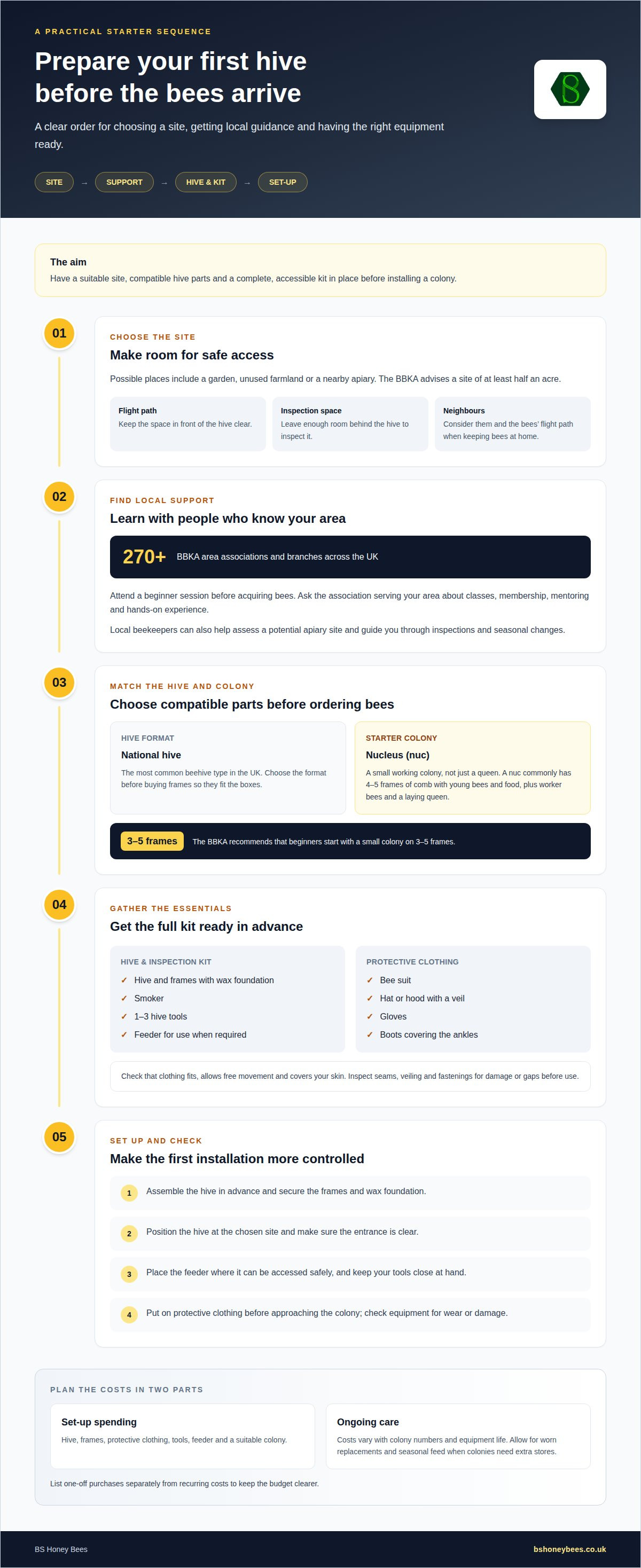
Beginner beekeepers need a hive, frames with wax foundation, protective clothing, a smoker, a hive tool and a feeder. You’ll also need a suitable colony, and the equipment should be ready before the bees arrive. If you’re getting started in beekeeping in the UK, listing the full kit helps distinguish essentials from items you can add later.
Protective clothing includes a bee suit, a hat or hood with a veil, gloves and boots that cover the ankles. Choose clothing that allows you to move freely while keeping your skin covered during inspections. Check the fit before approaching a hive. Damaged veiling or gaps at the cuffs can compromise protection, so inspect seams and fastenings before each use.
The total depends on the hive and clothing you choose, how many colonies you keep and what you already own. Separate setup spending from recurring costs, such as replacing worn equipment and providing feed when colonies need it. Getting started in beekeeping in the UK is easier to budget for when you list one-off purchases separately from seasonal care.
The National hive is the most common beehive type in the UK. Choose your hive format before buying frames, as they must fit the boxes you plan to use. Mismatched equipment can delay installation and complicate inspections. Keep components compatible as you add boxes or replace parts.
Prepare the essentials before installing bees:
- Set up the hive with frames and wax foundation fitted securely.
- Keep one smoker ready for use during inspections.
- Have one to three hive tools available for separating boxes and handling frames.
- Place a feeder with the hive equipment for feeding when required.
- Put on your suit, veil, gloves and ankle-covering boots before approaching the colony.
Preparation is practical, not cosmetic. Assemble the hive in advance, make sure the entrance is clear and position the feeder where you can access it safely. Having a complete kit ready helps you avoid leaving an open hive while searching for a missing tool.
Maintenance costs vary with the number of colonies and how well your equipment lasts. Wooden boxes, frames and protective clothing need attention when damaged or worn. Seasonal feeding can also add to running costs when bees need extra stores. Record purchases and replacements to distinguish initial expenses from regular care. This gives anyone getting started in beekeeping in the UK a clearer view of ongoing needs.
Gardens can suit beekeeping when the hive has a clear flight path and enough room behind it for inspections. Before spring installation, arrange the hive, tools and protective clothing at the chosen site. A prepared workspace keeps essential equipment close at hand and makes the first colony inspection more controlled.
2. Finding a local beekeeping association
Find a local beekeeping association and attend a beginner session before acquiring bees. Associations can introduce you to practical learning, local mentors and nearby apiary options.
The British Beekeepers Association (BBKA) has over 270 area associations and branches across the UK. Contact the association serving your area to learn about its beginner classes, membership and mentoring. A mentor can help you work through your first season, from recognising healthy colony behaviour to planning inspections and understanding seasonal changes.
Membership can connect you with other local beekeepers and give you a place to discuss practical questions. Ask about beginner sessions and opportunities for hands-on experience with a hive. Formal training isn’t a legal requirement for keeping bees in the UK, but learning the basics before handling a colony helps you prepare.
Use local beekeeping knowledge to assess a potential apiary. Possible sites include gardens, unused farmland or a nearby apiary. The BBKA advises that a beekeeping site should be at least half an acre in size. Look for a clear flight path in front of the hive and enough space behind it for inspections. Talk with neighbours before keeping bees at home, and ask an experienced local keeper to help assess the site.
- Find the association or branch serving your area.
- Ask about beginner classes, mentoring and membership arrangements.
- Discuss potential apiary sites and access for inspections.
- Learn how to recognise changes in colony health and seek local guidance.
Diseases and nearby outbreaks are important risks for honey bees. Registering on BeeBase is free, and registered UK beekeepers can receive alerts about disease outbreaks within 3km of their apiary. In England and Wales, registration is required. Association mentors can help beginners learn what to watch for and understand how local disease alerts affect apiary management. Bee stings can also cause severe reactions in some people, so understand your own health risks before working with bees.
Local support also helps you make a realistic start: a mentor can discuss site suitability, colony health and seasonal commitments in the context of your area. As you learn how healthy colonies produce a harvest, you can also explore English honey.
3. What do I need to start beekeeping?
Choose a suitable apiary site, a hive with matching frames and a nucleus colony before bringing bees home. To find a healthy starter colony, ask a local beekeeping association for recommendations on nucleus colony suppliers.
A nucleus, or nuc, is a small working colony rather than a queen alone. It commonly has four to five frames of comb containing young bees and food, with worker bees and a laying queen. The BBKA recommends that beginners start with a small colony on 3-5 frames. That gives you a colony to manage and observe as you learn.
Order early enough to coordinate the bees’ arrival with your prepared hive and site. Nucleus colonies for new UK beekeepers are usually available in late spring or early summer. Ask the association’s local suppliers about collection arrangements and the colony’s condition. Check for a laying queen, brood and food on the frames, and ask how the colony has been managed. A mentor can help you understand what you’re seeing before you install the nuc.
Choose the hive format before buying frames. The National hive is the most common type in the UK, but frames must match the boxes you select. A typical brood box contains 8 or 10 removable brood frames. Keep the hive and replacement parts compatible, so frames sit correctly and inspections remain straightforward.
Site choice affects access and the bees’ flight path. The BBKA advises a beekeeping site of at least half an acre. Leave clear space in front of the entrance for bees to come and go, and room behind the hive for inspections and harvesting. A garden can work if the hive position keeps flight paths clear of regular activity. Discuss your plans with neighbours before placing a hive at home.
Prepare the hive at its final location before the colony arrives. Fit the frames, check that the entrance is unobstructed and leave enough working space behind the boxes. Keep the route to the hive clear so you can carry equipment. If the site is shared or remote, agree access arrangements in advance.
Becoming a beekeeper is fascinating, but starting a colony takes more than a hive and bees. Use local association advice to match the colony, hive and apiary site. A prepared location and compatible frames make the first transfer more organised and give you a practical foundation for learning to keep bees.
4. How do I prepare my bees for winter?
Winter preparation starts well before cold weather. In the UK, a colony needs around 20kg of stores to survive winter, so assess its food after the main honey crop. Feed in autumn if the colony needs extra stores, and fit a mouse guard to the hive entrance before winter.
Seasonal work changes through the year. Spring is generally the best time to begin keeping bees, while a starter nucleus is usually obtained in June or July. During spring and summer, inspect colonies every 7–10 days to monitor health and available space. In spring, carry out inspections when the weather is above 14 degrees Celsius.
For new beekeepers, a nucleus colony offers a practical way to establish a hive. It contains a queen, worker bees and brood, giving the colony a foundation to build on. A swarm or package is another way to start, but each option needs a prepared hive and careful management after arrival. Plan the timing around the colony’s needs and your ability to manage it through the active season.
The queen’s laying rate affects the colony’s development. At peak season, a queen can lay up to 2,000 eggs per day. That growth means regular summer inspections are important: assess brood, food and space, and avoid taking honey the bees need. Harvest only surplus honey. A strong summer crop does not remove the need to leave enough stores for winter.
At summer’s end, shift your attention from expansion to winter readiness. In Scotland, allow a few extra days in August–September to process the honey crop and feed bees for winter. Check stores, complete any needed feeding and make sure the entrance has a mouse guard. These tasks help support the colony through the colder months, when opportunities for hive work are limited.
Once honey bees are settled for winter, avoid unnecessary disturbance. In Scotland, colonies generally need very little attention from October to March, apart from any recommended varroa treatments. Follow the treatment guidance appropriate to your colony and keep a record of what you’ve done. Winter is a useful time to review colony notes and prepare equipment for spring.
- Spring: inspect when conditions are suitable and track colony health and space.
- Summer: monitor growth and take only surplus honey.
- Late summer and autumn: assess stores, feed when needed and fit mouse guards.
- Winter: minimise disturbance and attend to recommended varroa treatments.
These seasonal tasks make winter preparation part of a year-round plan. Start with a colony you can manage, monitor its food and condition, and complete essential protection before colder weather arrives.
5. Beginner beekeeping courses
A beginner course can turn beekeeping theory into a safer, more informed first season. Aim for a course lasting at least 16–20 hours. That gives time to cover colony behaviour, handling equipment and the decisions involved in managing a hive, rather than relying on a brief introduction.
Look for a programme that combines classroom learning with practical demonstrations. A beginner should learn how to approach a hive, use a smoker, lift frames steadily and recognise the queen, brood and food stores. Observing these tasks before handling a colony helps you understand what an inspection involves. Practical sessions also show how protective clothing should fit and how to work calmly around honey bees.
Disease awareness deserves a place in the course. Learn why regular observation matters, which changes in brood or adult bees may need attention, and how to respond to local disease alerts. A course should explain the purpose of varroa monitoring and treatment, alongside the importance of clear records. These basics help you discuss colony health more effectively with an experienced beekeeper or mentor.
Seasonal learning makes the material easier to apply. Spring sessions can explain colony expansion and inspection routines, while summer topics may include swarm management and decisions about taking surplus honey. Autumn learning should cover food stores and winter preparation. Ask how the course addresses seasonal changes, especially if the teaching calendar doesn’t coincide with every stage of the beekeeping year.
Before enrolling, use this checklist to focus on practical value:
- Check that the course offers at least 16–20 hours of learning.
- Look for a clear balance between theory, demonstrations and supervised hive work.
- Make sure colony health, disease awareness and seasonal care are covered.
- Ask whether course notes or a record-keeping example are included.
- Find out how the course links learners with local association support or mentoring.
A friendly learning environment helps beginners ask direct questions, such as how to tell whether a colony has enough space or what to do before winter. Use these opportunities to connect general lessons with your intended hive setup and local conditions. If the course doesn’t include practical hive work, arrange to observe inspections with an experienced keeper before managing bees independently.
Learning doesn’t end when the course does. Keep a notebook for inspection observations, questions and seasonal tasks. After each visit, record what you saw and discuss uncertainties with a mentor. Your notes become a useful reference when colony behaviour changes or disease concerns arise. For a new beekeeper, a clear foundation for informed decisions throughout the first season is a valuable outcome.
BS Honey Bees
BS Honey Bees Ltd can help you move from planning to choosing the bees and equipment for your first colony. Its range includes 5 / 6 Frame Nucs, F1 Buckfast Queens and Carniolan Queens, alongside British National Hives & Frames and 2 in 1 Poly Nucs.
If you’re preparing an apiary, match your colony to a hive system and your beekeeping plans. A nucleus colony provides a starting colony, while a queen is relevant when managing or developing a colony. Compatible hive equipment helps you prepare for inspections and future expansion.
Contact BS Honey Bees Ltd to discuss the beekeeping products that fit your plans.
Make your first season a considered one
Getting started in beekeeping in the UK means learning from your colony as the seasons change. Give yourself time to build practical confidence, keep clear notes and use trusted local support when decisions arise. A thoughtful start helps you develop sound habits that can guide your apiary well beyond its first season.
Your next step might be choosing a suitable colony or matching your plans to the right equipment. BS Honey Bees Ltd offers F1 Buckfast Queens, Carniolan Queens and 5 / 6 Frame Nucs for beekeepers making those choices. Consider what you need for your own setup, then contact BS Honey Bees Ltd for advice.
Beekeeping rewards patience, observation and steady care. Start with a clear plan, stay curious and treat each season as an opportunity to become a more confident keeper.
Frequently Asked Questions
Where can I keep my bees?
You can keep bees in a garden, on a roof, on unused farmland or at a nearby apiary. Choose a position with a clear flight path from the entrance and safe access for carrying equipment. Consider how bees will move around people using the space, and discuss a home apiary with neighbours beforehand. If your garden is unsuitable, a beekeeping association may help you explore a shared or nearby apiary.
What do I need to start beekeeping?
You need a suitable site, a compatible hive and frames, protective clothing, tools and a colony. Plan how you’ll manage inspections and seasonal care before ordering bees. A local beekeeping association can help you learn practical basics and connect with a mentor. Choose a colony that suits your experience and setup, then arrange its arrival once the hive is assembled and ready at the apiary.
What equipment will I need?
Prepare a hive with frames and wax foundation, a bee suit with veil, gloves, boots that cover the ankles, a smoker, a hive tool and a feeder. Keep your protective clothing together so you can put it on before approaching the colony. Check the veil and suit for damage, and place tools within reach before opening the hive. Matching replacement frames to your hive type also makes later maintenance more straightforward.
How do I prepare my bees for winter?
Assess the colony’s stores after the honey harvest, and feed in autumn if it needs additional food. A UK colony needs around 20kg of stores to get through winter. Fit a mouse guard at the entrance before colder weather, and avoid taking honey the colony requires. Once winter arrives, minimise disturbance. In Scotland, settled colonies need little attention from October to March, apart from recommended varroa treatments.
How many beehives should a beginner start with?
Start with one or two hives so you can learn inspection routines and colony management at a manageable pace. Two colonies let you observe differences in behaviour and development, but they also require more equipment and work. Keep separate notes for each hive to compare food stores, brood and changes between inspections. Focus on keeping colonies healthy before expanding your apiary.
How many hives should I start with?
For a first season, one or two hives is a practical starting point. The right number depends on your available time, space and access to experienced support. With one colony, you can focus on its needs; two allow useful comparison but increase inspection and equipment demands. Avoid expanding quickly: build confidence in routine care before taking on more colonies.
How much does it cost to start keeping bees?
Your budget covers more than the hive: protective clothing, tools, a feeder and a colony also affect the total. Costs depend on what you already own, your chosen hive format and the number of colonies. Make a checklist before buying so you can identify essentials and avoid purchasing frames that don’t fit your hive.
How much time does it take?
Allow regular time for inspections during the active season. Caring for one hive takes about half an hour a week between April and October, although tasks vary with colony condition and seasonal demands. Spring and summer inspections are commonly needed every 7–10 days. Set aside time for preparation and record-keeping too, and plan for extra work if feeding or other seasonal tasks are needed.