What if one bare patch of brood tells you less than the pattern across the whole nest? If you’re searching for “beehive inspection what to look for”, assess the colony as a whole rather than drawing conclusions from one frame or one visit.
It’s understandable to feel unsure when brood looks different from what you expected, stores seem low or the queen stays out of sight. Opening a hive can disturb the colony, so a clear routine helps you focus on useful evidence without lingering over every frame.
This guide sets out a consistent inspection sequence to help you assess brood, food stores, signs of queen activity and possible disease or pests. You’ll learn what healthy patterns can look like, which warning signs merit a closer check, what to record and when to seek further advice. Interpret your findings in context, including the season and previous inspections, to decide what to check next.
Key Takeaways
- Consider the colony’s condition, weather, season and forage; the queen isn’t the only measure of hive health.
- Follow a steady frame-by-frame sequence, keep frames in order and leave the hive open only as long as needed.
- Use this guide to understand beehive inspection what to look for, and treat unusual signs as prompts for a closer check, not a diagnosis.
- Record what you observe so you can compare changes over time and make better-informed decisions.
- Sort findings into routine monitoring, a planned action or a reason to seek experienced or official advice.
Beehive inspection: what to look for before opening the hive
An inspection helps you assess the colony and decide what, if anything, it needs next. Finding the queen can be useful, but it isn’t the only measure of health. Brood pattern, adult bees, food stores and signs of pests all contribute to the picture. Beekeeping (or apiculture) involves managing bee colonies in artificial hives, and inspections are one way to guide that management. If you’re asking “beehive inspection what to look for”, start with the whole colony, not one frame or sign in isolation.
What you see depends on conditions. Weather affects whether bees are flying and how calmly the colony can be inspected. Season influences brood rearing, available stores and the tasks that may need attention. Colony strength and local forage matter too. A developing spring colony, an active summer colony and a colony preparing for autumn may show different patterns. Compare your observations with the season and your own previous records.
When is a hive inspection appropriate?
Choose a calm, dry spell with suitable conditions for opening the hive. Avoid cold, wet or windy weather, which could chill brood or unsettle the bees. Check current UK beekeeping guidance and conditions at the apiary rather than relying on a rigid calendar. Routine inspections help you follow colony development; a targeted follow-up is prompted by a specific concern. Make either visit purposeful, and don’t open the hive just to look without a clear reason.
Season shapes your focus. During spring build-up, assess whether the colony is developing and has adequate room and stores. In summer, observe brood, colony activity and signs that may need a closer look. As autumn approaches, consider the colony’s condition and preparation for colder months. These are broad priorities, not a substitute for judging the evidence in your hive.
What should you prepare before lifting the crownboard?
A purposeful inspection starts with a clear question about the colony and ends with an appropriate next step. Prepare before opening so you can work steadily, avoid searching for equipment with the hive exposed and minimise disturbance.
- Check that your smoker is ready to use, and have a hive tool to hand.
- Prepare a notebook or another way to keep records, along with any clean equipment needed for the planned check.
- Wear a properly fitting bee suit and veil. Use the bee suit sizing guide to help assess protective fit.
- Decide what you need to assess before lifting the crownboard. Work calmly rather than prolonging the visit.
Protective clothing and suitable hive equipment support preparation, but they don’t replace careful handling or sound judgement. Keep your purpose in mind and let the evidence guide what you check next.
A frame-by-frame beehive inspection checklist for brood, bees and stores
Work in a consistent order so you can compare observations and return each frame to its original position. A detailed beehive inspection checklist can help keep brood, food, space and possible pests on your radar. Apply any guidance in context: season and local conditions affect what’s normal for a UK colony.
- Observe the entrance. Before opening the hive, note whether bees are flying, carrying pollen or clustering. Look for unusual activity, such as dead bees. Treat these as clues to check inside, not conclusions on their own.
- Open the hive calmly. Use smoke sparingly if needed, then lift the crownboard carefully. Avoid jolting the box or leaving the colony exposed longer than necessary.
- Assess adult bee coverage. Note how many frames are occupied and whether bees cover the brood area. Compare this with the colony’s apparent strength and the time of year.
- Inspect frames in sequence. Keep each frame in order as you lift it. Look for eggs, larvae and capped brood, then consider the pattern across the frame. Healthy brood need not form a perfectly uniform block. Record unusual gaps or scattered patches for follow-up.
- Check brood and adult bees together. Note whether the bees cover and attend the brood. Record any mismatch, such as a small area of brood among sparse adult bees. Eggs can be useful evidence of recent laying, but you don’t always need to find the queen to assess the colony.
- Assess stores, space and comb. Consider available food and empty laying space in relation to colony strength and season. Record comb that looks damaged, heavily soiled or unusually empty, but don’t assume one feature confirms a problem.
- Replace frames and close the hive. Return each frame to its original position, taking care not to crush bees, then close the hive securely. Make brief notes while the details are fresh.
Brood, bee coverage and stores make sense as a picture together; any one of them alone can give a misleading impression of colony health. Record what you actually see, including the frame and location, rather than labelling the colony as queenless or diseased from one sign. This is the practical answer to beehive inspection what to look for: follow a sequence, compare related signs and use unusual findings to decide what needs a closer check.
If you’re preparing or reviewing your equipment, BS Honey Bees Ltd supplies British National hives and frames for beekeepers across the UK.
How to interpret unusual signs without misdiagnosing the colony
One unusual frame or a quiet entrance doesn’t confirm a queen problem, disease or pest infestation. Weather, season, colony development and recent management can all affect what you see. For a reliable answer to beehive inspection what to look for, record the observation, compare it with previous visits and look for patterns or changes before deciding what to do.
| Observation | Possible explanations | Sensible next check |
|---|---|---|
| Sparse or scattered brood | Seasonal changes, a developing or changing colony, recent disturbance or a queen-related issue may be relevant. | Record which frames are affected. Check whether the pattern repeats at a later inspection and note any eggs, larvae and adult-bee coverage. |
| Unusual adult-bee behaviour or declining numbers | Weather, forage conditions, colony strength or other pressures may influence activity. | Compare entrance activity and bee coverage with earlier observations, taking the day’s conditions into account. |
| Unexpectedly low stores | Available forage, season and colony demand can affect food reserves. | Assess stores across the frames and consider the colony’s condition and time of year before planning a response. |
| Visible mites, abnormal debris or unusual larvae | These may warrant closer assessment, but appearance alone doesn’t establish the cause. | Note where and what you saw. Check current reliable guidance and seek appropriate advice if the signs persist or concern you. |
Which observations call for closer follow-up?
Look for change, not just a single irregularity. Repeated brood abnormalities, falling adult-bee numbers or stores that seem unexpectedly low deserve a clear record and a planned recheck. Note the date, weather, affected frames and any recent management, then compare like with like. If you’re concerned that a queen-related pattern may be present, consult this drone-laying queen symptoms guide for focused information rather than drawing a conclusion from one sign.
What should you do if you suspect a serious disease?
Don’t self-diagnose from one symptom. If signs raise a serious concern, avoid unnecessary frame movements and don’t transfer potentially contaminated equipment between colonies. Check the latest National Bee Unit and APHA guidance for the relevant instructions in your nation of the UK; reporting routes and advice may differ. Follow official guidance promptly where it indicates action is needed.
For less urgent observations, record what you found and monitor for change at an appropriate follow-up. Keep routine tracking separate from signs that may require official advice. The aim is neither to dismiss warning signs nor to treat every variation as a crisis. Use evidence, context and current guidance to choose the next step.
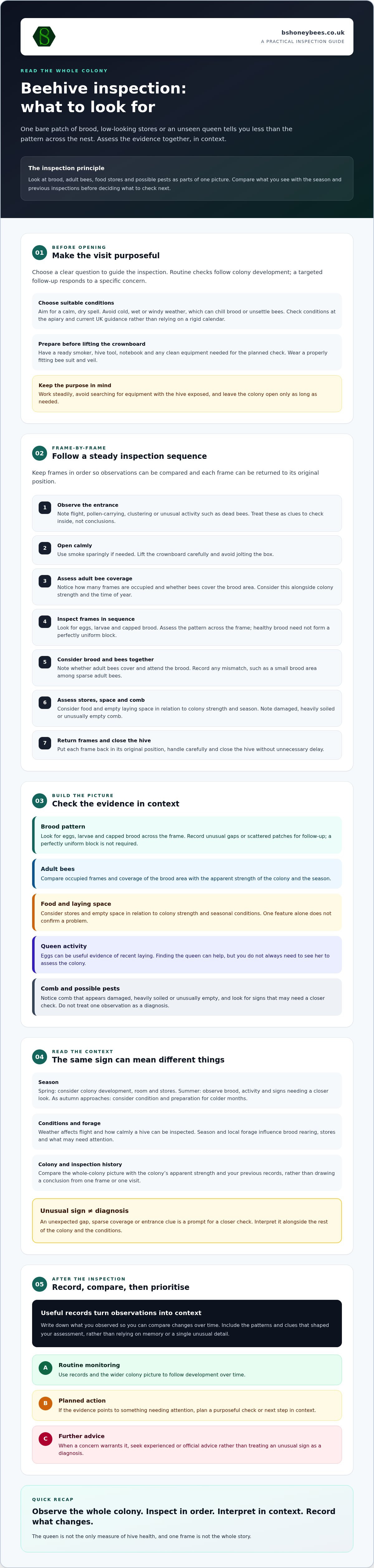
How to inspect a beehive calmly and keep useful records
A steady approach makes it easier to observe the colony without unnecessary disturbance. Move deliberately, follow the same frame order each time and record clear observations rather than relying on memory. For beehive inspection what to look for, calm handling matters as much as the checklist: rushing can crush bees or make comparisons harder.
What is a sensible frame-handling routine?
Open the hive gently and use smoke sparingly, only as needed to help manage bee behaviour. Lift frames vertically and, where practical, keep them over the open hive so bees that fall remain close to the colony. Scan both sides in a consistent order, then return each frame to its original position before moving on. Work steadily, avoid sudden movements and take care not to trap bees between frames or boxes.
When you’ve finished, replace the crownboard and roof securely. Check that the entrance is unobstructed, then step away without lingering in the bees’ flight path. A repeatable routine helps you focus on observations instead of working out what to do next.
What belongs in an inspection record?
Write notes in plain language and distinguish what you saw from what you suspect. For example, record “scattered capped brood on the central frame” rather than labelling the colony with a diagnosis. Include enough context to make a later comparison useful.
- Date and conditions: note the weather and any relevant conditions during the visit.
- Brood: describe eggs, larvae, capped brood and any gaps or changes you observed.
- Stores: record whether food appeared low, adequate or plentiful for the colony and season.
- Queen evidence: note whether you saw the queen or signs such as eggs, without treating either observation as a complete diagnosis.
- Colony strength and concerns: describe adult-bee coverage and any unusual signs, including where you noticed them.
- Action: record what you did, what you plan to check next and when you intend to review the finding.
Consistent records turn separate inspections into a clearer picture of how the colony is changing over time. A brief, factual note is more useful than a long entry written from memory later.
For practical inspection preparation, explore bee suits and hive equipment from BS Honey Bees Ltd, and choose items suited to your setup and working practices.
After a beehive inspection: prioritise the next step
Finish by sorting your observations into a clear next step. Not every variation needs immediate action, and a single unusual sign doesn’t establish a trend. Compare your notes with previous inspections, then consider the evidence alongside the season and the colony’s development. Knowing beehive inspection what to look for helps you make a measured decision instead of reacting to one finding in isolation.
How do you decide whether to monitor or act?
Use three broad categories to organise what you found:
- Routine monitoring: The colony appears broadly consistent with its recent condition, and an isolated observation doesn’t raise a specific concern. Record it and compare at a suitable future inspection.
- Planned management action: Your observations point to a clear colony need. Decide what to do with the evidence, season and current authoritative guidance in mind, then record the action and what you’ll check afterwards.
- Experienced or official advice: The signs are persistent, unclear or potentially serious. Ask an experienced beekeeper or appropriate association for help. If you suspect serious disease, follow current National Bee Unit and APHA guidance for your nation of the UK rather than trying an unverified treatment.
Make the decision specific. For example, if stores seem low, compare the finding with earlier records and the time of year before deciding whether management is needed. If a brood irregularity appears again or worsens, note the change and seek suitable advice if you’re unsure how to interpret it. Where serious disease is suspected, avoid unnecessary movement of frames or equipment while checking official instructions.
Which equipment supports a well-organised inspection?
Suitable protective clothing, including a properly fitting bee suit and veil, helps you work with confidence. A hive tool supports controlled handling of boxes and frames, while compatible equipment helps maintain an orderly setup. These items support careful practice, but don’t replace calm handling or sound decisions. British National hives and frames are one equipment option, not a requirement for every inspection. For more on this hive type, see the British National beehive guide.
Keep the follow-up proportionate: monitor routine changes, plan management when the evidence supports it, and seek reliable help when uncertainty or serious concerns remain. To prepare your apiary with suitable protective clothing or hive equipment, explore beekeeping equipment from BS Honey Bees Ltd.
Make your next hive inspection count
A useful inspection is about patterns, not one-off signs. Follow a calm, repeatable sequence, assess brood, adult bees and stores together, and record what you observe. If something looks unusual, compare it with previous notes and the season before deciding whether to monitor, act or seek advice.
Knowing beehive inspection what to look for helps you make better-informed choices without needing to find the queen on every visit or diagnose a problem from one clue. Suitable protective clothing and compatible hive equipment can also help you work in an organised way. BS Honey Bees Ltd supplies beekeeping equipment across the UK, including BBWear bee suits and British National hives and frames.
Explore beekeeping equipment for your apiary, and take your next inspection one step at a time. With a clear routine and useful records, you can build confidence with every visit.
Frequently Asked Questions
How often should you inspect a beehive?
Inspect according to the colony’s condition, season and any specific concern, rather than following a fixed schedule regardless of circumstances. During active periods, routine checks can help you follow development and spot changes. Outside those periods, avoid opening the hive without a clear purpose. Choose suitable weather and use current UK beekeeping guidance to inform your approach. If a particular warning sign appears, a targeted follow-up may be appropriate.
What should I look for during a beehive inspection?
Assess the colony as a whole: adult-bee coverage, eggs, larvae and capped brood, available food stores, space, comb condition and possible signs of pests. Notice how the bees behave and compare your observations with previous records and the season. The aim is to recognise patterns, not diagnose the colony from one unusual frame. Record what you see, including where you saw it, and decide whether it needs monitoring or further advice.
Do I need to find the queen during every hive inspection?
No, finding the queen isn’t necessary at every inspection if you can assess other useful evidence. Eggs can indicate recent laying, while brood and adult-bee coverage help you judge how the colony is developing. Record whether you saw the queen or signs of her activity, but don’t treat either observation alone as a complete assessment. Keep the inspection focused on the colony’s condition and the question you set out to check.
What does an irregular brood pattern mean?
An irregular brood pattern can have several explanations, and one frame isn’t enough to identify the cause. Season, colony development, recent management and other conditions may affect what you see. Note whether gaps or scattered brood occur across more than one frame, and look at eggs, larvae, capped brood and adult-bee coverage together. Record the finding and compare it at a suitable follow-up. Seek experienced advice if the pattern persists or you’re concerned.
Can I inspect a beehive in cold or wet weather?
It’s generally better to wait for a calm, dry spell with suitable conditions before opening a hive. Cold, wet or windy weather can chill exposed brood or unsettle the colony, and may make handling more difficult. If you’re concerned about an urgent issue, avoid an unnecessary full inspection and check current authoritative guidance for the appropriate next step. Consider conditions at the apiary as well as the forecast.
What should I do if I see possible signs of disease in my hive?
Don’t diagnose disease from one symptom or try an unverified treatment. Record exactly what you observed, including the affected frames and any unusual larvae or debris. Avoid unnecessary frame movements and don’t transfer potentially contaminated equipment between colonies while you check current National Bee Unit and APHA guidance for the relevant nation of the UK. Follow official instructions where action is advised, and seek experienced help if you’re uncertain.
What should I write in a beehive inspection record?
Record the date, weather and relevant conditions, then describe brood, stores, adult-bee coverage and any evidence of queen activity in plain language. Note concerns, recent management and what you did or plan to check next. For example, write “eggs seen on central frame” rather than making an unsupported diagnosis. Consistent notes make it easier to compare inspections, identify changes and decide whether to monitor, take a planned action or seek advice.